
Some things don’t shift until you bring the body in.

What does Somatic Coaching with me involve?
✓ Complementing mindset, thinking, and talking work by adding the body and nervous system explicitly to the conversation.
✓ Using SE (Somatic Experiencing): SE is a body-based approach developed to restore nervous system fluidity after overwhelming events.
✓ Using somatic “parts work”: exploring your system through the framework of different “parts” of you that may have competing needs or protective roles.
✓ Building and practicing the habit of paying attention to physical sensations, movement impulses, and nervous system patterns alongside whatever other modalities you’re working with.
✓ Sessions are relational and educational: we take time to connect, establish a container, then work with your body at the right pace to support change.
This work is a good fit for these situations:
You are already working with a therapist or other mental health provider and there’s something talk alone isn’t reaching. Somatic coaching brings the body and nervous system into the conversation, supporting the work you’re already doing without replacing it.
Something specific happened to your body: an accident, surgery, injury, or illness that left residue not fully addressed by medical care. Somatic Experiencing is especially designed to restore fluidity in systems after traumatic physical events.
You’re working toward something important (performance, presentation, competition), and your body has a lot to say about it. This might show up as tension, nausea, shaking, or other sensations you experience right when you need to be at your best. Somatic coaching helps you work with your nervous system instead of against it.

A note on how I work:
Somatic Coaching works best as part of a larger support picture.
I am not a therapist or medical professional, and this is not a replacement for mental health or medical care. It’s a complement to it.
When we have our initial discovery call, I’ll ask you about what other support you have in place.
I will always let you know if we encounter something outside my scope, and will refer out to other professionals.


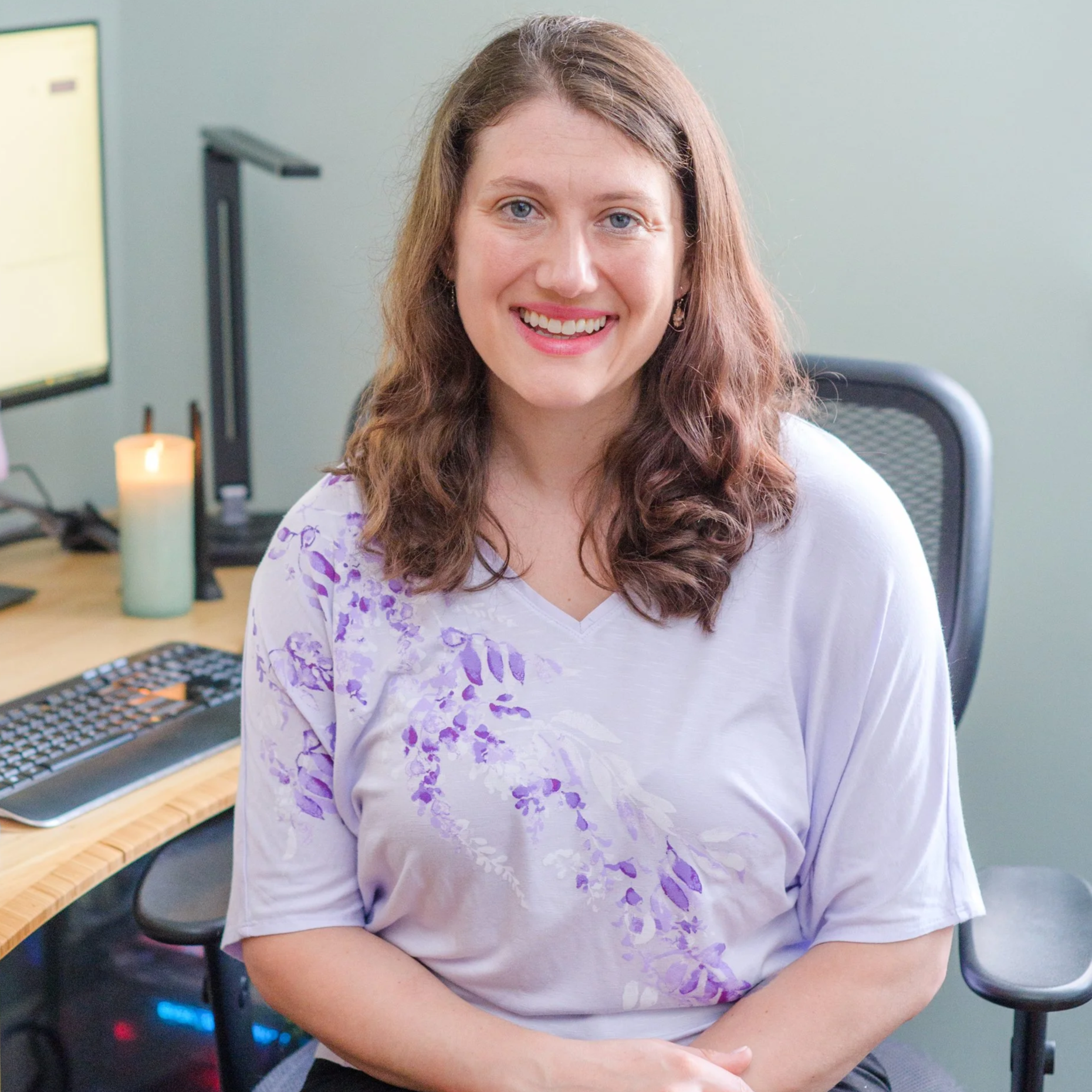
Hi, I’m Katie LaCelle
I came to somatic work through an unusual path: chemical engineering, organizational leadership, consulting, circus, and a lot of my own internal work. That combination shapes how I practice. I'm drawn to complexity and nuance. I’m comfortable with uncertainty. I think in systems, and I bring the same quality of attention to the body and nervous system that I bring to everything else.
I hold advanced training in Somatic Experiencing and parts work, and I have done significant inner work. That matters because this work absolutely requires your practitioner to have a well-resourced, regulated nervous system. I take that very seriously.
My practice is intentionally bounded. I work best as one part of a larger support picture, and I'll always be clear with you about what's inside and outside my scope.
Training & Background
Somatic Experiencing Practitioner (SEP) Advanced Trainee (Certification expected October 2026)
Certification in Traumatic Stress, Trauma Research Foundation
IFS Level 1 & 2; program assistant for two IFS Level 1 trainings
M.A. in Organizational Leadership
15+ years in organizational consulting & facilitation
10 years teaching and performing circus arts
